
Forest School in Plymouth: Activity Days, Six-Week Blocks or a Full Programme?
If you are a primary school in Plymouth looking at Forest School, the first decision is not which activities to choose. It is how often you want your pupils in the woods. A single activity day, a six-week block and a year-round programme are all sold under the Forest School name, but they deliver very different things. This guide explains what each format realistically achieves, so you can match Forest School to your timetable, your budget and the outcomes you actually need.
At South West Survival we run all three formats for schools in Plymouth and across Devon and Cornwall, either on your own school grounds or at our woodland site. Here is how we help schools choose.
What makes Forest School different from an outdoor day
The Forest School Association, the professional body for Forest School in the UK, sets out six principles for Forest School. The first is that it is a long-term process: regular sessions with the same group, ideally across more than one season, with planning, observation and review built in. Another is that sessions are led by a qualified practitioner holding at least a Level 3 Forest School qualification.
That matters when you compare providers. A one-off day in the woods can be excellent outdoor learning, but on its own it is a taster rather than a full Forest School programme. Being clear about that from the start helps you set realistic expectations with staff, parents and governors.
Option 1: a Forest School activity day
An activity day is a single day in the woods. Schools use them for enrichment weeks, end-of-term rewards, transition days, or simply to see how a class responds before committing to something longer.
What pupils typically do
Building a group shelter from tarps and natural materials
Fire lighting and fire safety, including how to behave around a fire
Natural navigation and simple woodland challenges
Age-appropriate tool use, such as whittling, under close supervision
Nature crafts and exploring the woodland

Best for
A first taste, a reward, or a class that has never spent proper time outdoors. Expect excitement, new experiences and plenty to write and talk about back in class. Do not expect one day to change confidence or behaviour on its own. That comes with repetition.
Option 2: a six-week Forest School block
A six-week block is one session a week for half a term, planned around your timetable. It is the format most primary schools start with, because it fits neatly into a half term and a single budget line.
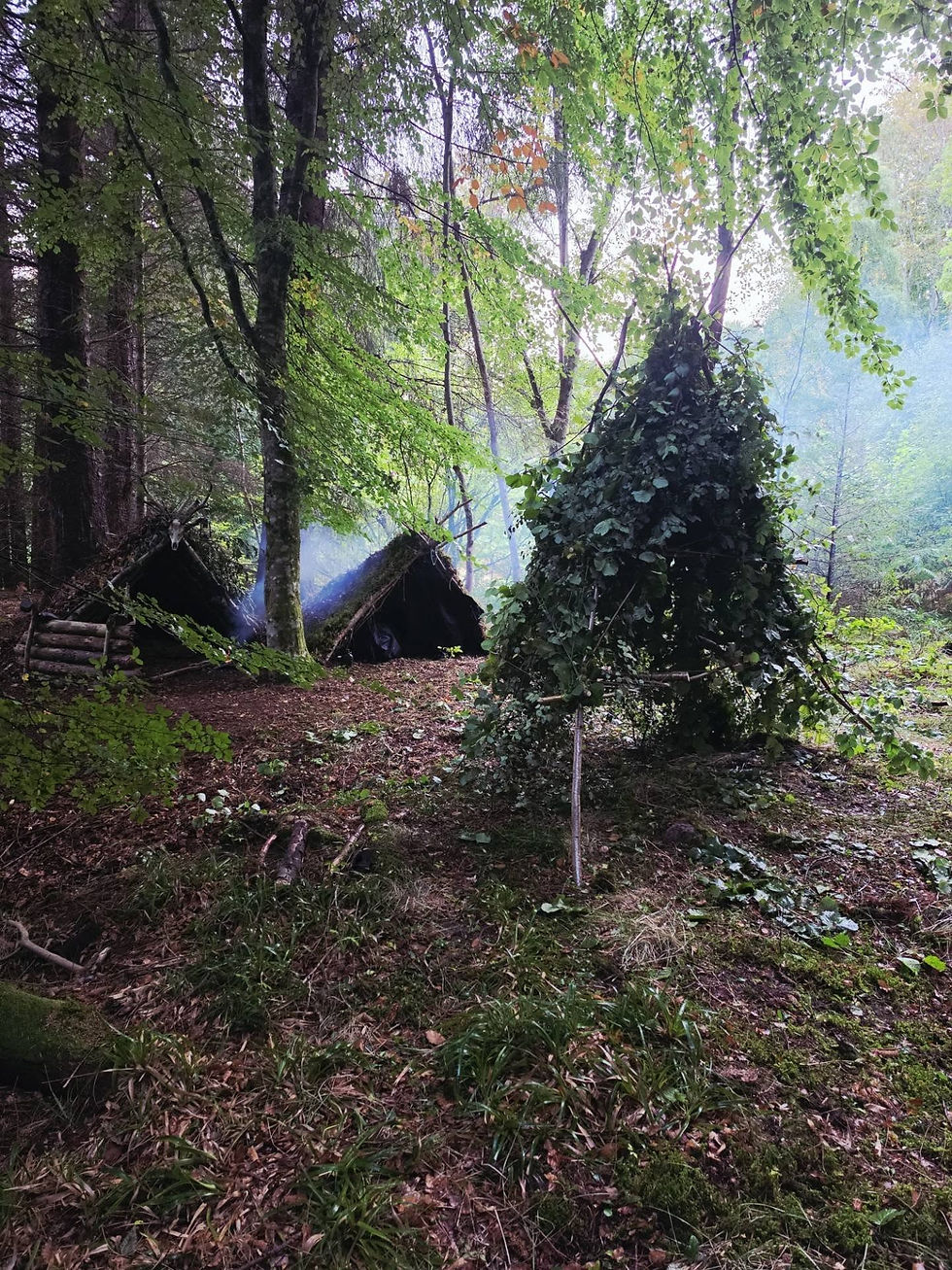
Six weeks gives pupils time to get past the novelty. Routines settle, the group learns how to work safely around tools and fire, and activities can build week on week, from a simple shelter in the first session to a group camp with a fire by the last.
Best for
Schools trialling Forest School with one year group, or a targeted group of pupils who would benefit from a regular, structured session outdoors.
Option 3: a long-term programme across the seasons
A long-term programme runs weekly or across whole terms, with the same group returning through the seasons. This is the format closest to the Forest School Association principles, and it is where Forest School stops being an event and becomes part of how your school teaches.
Pupils see the same woodland change from autumn into spring. Skills are revisited and extended rather than started from scratch, and sessions can link back to classroom learning, from seasonal change in science to mapping in geography and teamwork and resilience in PSHE.
Best for
Schools that want Forest School on the timetable, not just the calendar. It asks for more commitment, but it gives the most back over time.
The three options at a glance
Activity day: one day in the woods. A taster, reward or enrichment day, and the easiest to book.
Six-week block: one session a week for half a term. Builds routines and skills, and is a sensible first commitment.
Long-term programme: weekly or termly sessions across the seasons. The fullest Forest School approach, with the strongest links to the curriculum.
Questions to settle before you book
Whichever format you choose, these are the questions we will ask early on. Having the answers ready speeds everything up.
Where will sessions run? On your own school grounds or at our woodland site. On-site sessions save travel time, while a woodland site gives pupils a completely different environment.
Which year group, and how many pupils? We work to a ratio of one instructor to eight pupils, with school staff alongside.
Half day or full day? Both are possible. Half days fit a timetable more easily, while full days allow more ambitious activities.
Are there additional needs? Give us a brief summary at enquiry stage so sessions can be adapted. Detailed information is shared separately once a booking is confirmed.
What kit will pupils need? Warm layers, waterproofs and sturdy footwear are the basics. We agree a full kit list once dates are confirmed.
Forest School is not the same as a residential
Schools sometimes ask whether Forest School and a residential trip are the same thing. They are separate services. Forest School is regular, day-based learning in woodland. A residential is an overnight experience where pupils and staff sleep in bell tents and help cook meals over the campfire. Many schools use both: Forest School through the year, and a residential as a highlight. You can find out more on our school residentials page.
Who leads the sessions
South West Survival was founded by Steven Kelly, a former 29 Commando Regiment soldier with 23 years' service in the British Army. Steven holds the AIM Qualifications Level 3 Certificate for Forest School Leaders and an NCFE Level 4 bushcraft qualification, and our instructors are DBS-checked.
If you want to know what pupils gain from regular sessions, read our guide to what children really learn at Forest School.
Plan Forest School for your school
If you are a Plymouth school weighing up Forest School, tell us your year group, rough pupil numbers and which format you are leaning towards. We will come back to you to talk through dates, location and activities.
See what we offer on our Forest School page, or send us an enquiry through our contact page.
About the author
Steven Kelly is the founder of South West Survival, a survival instructor and a British TV survivalist who has appeared on Naked and Afraid. You can read more about his background at stevenkelly.uk.
Comments