
What Do Children Really Learn at Forest School? Five Skills Beyond Building Dens
Updated: 26 minutes ago
A good Forest School session is not simply a walk in the woods. It gives children time and space to explore, make decisions, work together and become more comfortable outdoors. For schools in Plymouth, Devon and Cornwall, that can be a valuable part of a wider education.
1. Learning to solve problems
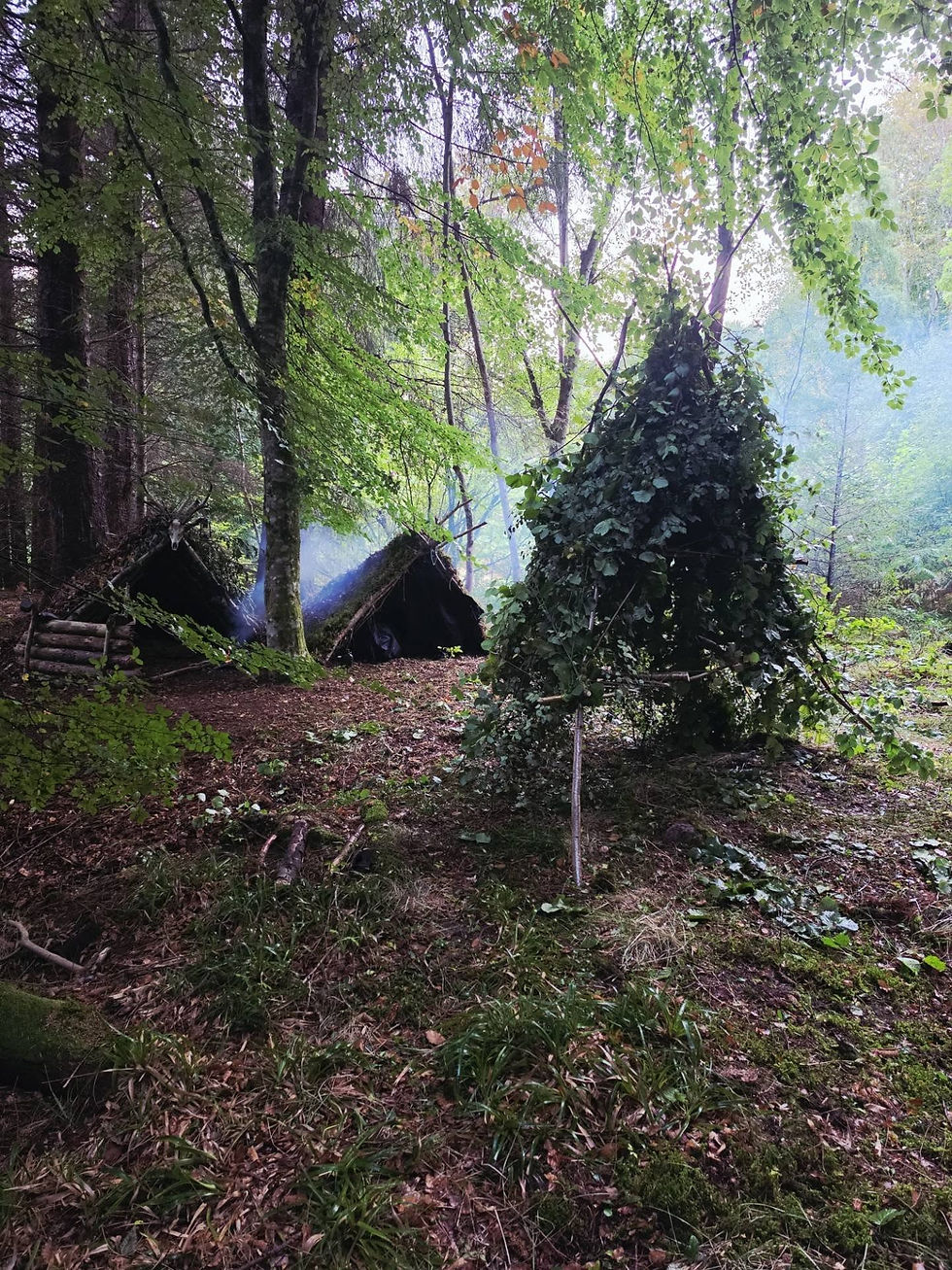
Give a group of children a simple challenge, such as making a shelter that can withstand a light shower, and they soon discover that the first idea does not always work. They have to test materials, notice what changes and try again. The process matters more than producing a perfect shelter.
2. Building confidence through manageable challenges
A child who is reluctant to join in may begin by collecting sticks, watching others or asking questions. With appropriate support, small decisions and achievable tasks can help them take part at their own pace. Confidence is not something we can promise after one session, but we can create opportunities for it to grow.
3. Working together without everyone doing the same job
Outdoor activities naturally create different roles. One pupil might plan, another gather materials and another spot a problem. Building a den or following a simple navigation challenge gives the group a reason to listen, negotiate and share responsibility.
4. Noticing the natural world
Woodland offers plenty to investigate: the texture of bark, signs of animal activity, changes in weather and the difference between a sheltered and exposed spot. Children can practise observing carefully rather than rushing to an answer. Any foraging or plant identification should be guided by a knowledgeable adult; nothing should be eaten simply because it looks familiar.
5. Understanding risk rather than ignoring it
Forest School should be adventurous, but not reckless. With suitable supervision and planning, children can learn why we check the ground before choosing a shelter site, how to handle equipment appropriately and when to ask for help. Activities must be matched to the group, site and individual needs.
What does a session actually look like?
A session might include a short group introduction, a practical woodland task, time to investigate and a closing reflection. Depending on the programme, children may explore shelter building, natural navigation, simple crafts or other age-appropriate activities. The point is not to cram in as many activities as possible. It is to give children meaningful time to learn.
Forest School and school residentials are different
At South West Survival, our school-focused work includes Forest School provision and separate residential experiences in Devon and Cornwall. A residential can bring together a wider programme of outdoor activities and shared camp experiences; Forest School is a distinct approach centred on regular, learner-led experiences. Schools should choose the format that suits their objectives and pupils. Find out more on our school residentials page.
Planning outdoor learning for your school
Start with the children, not the equipment list. Consider the age group, additional needs, curriculum aims, available time and what you would like pupils to practise. A well-planned session can be simple and still worthwhile. If you are deciding between a one-off day and a longer programme, read our guide to choosing a Forest School programme.
South West Survival is based in Plymouth and works with schools across Devon and Cornwall. To discuss Forest School sessions or a separate school residential, use our contact page or see what we offer on our Forest School page. You can also read more about our founder, Steven Kelly.
Comments