
What You'll Actually Learn on a Commando Survival Weekend Near Plymouth

I've spent 23 years in the British Army and 56 days on Naked and Afraid, so people often ask me what a Commando survival course actually involves. Usually they picture something from television: no food, no sleep, a bloke screaming at them and somebody hanging off a cliff. That's not what we're doing.
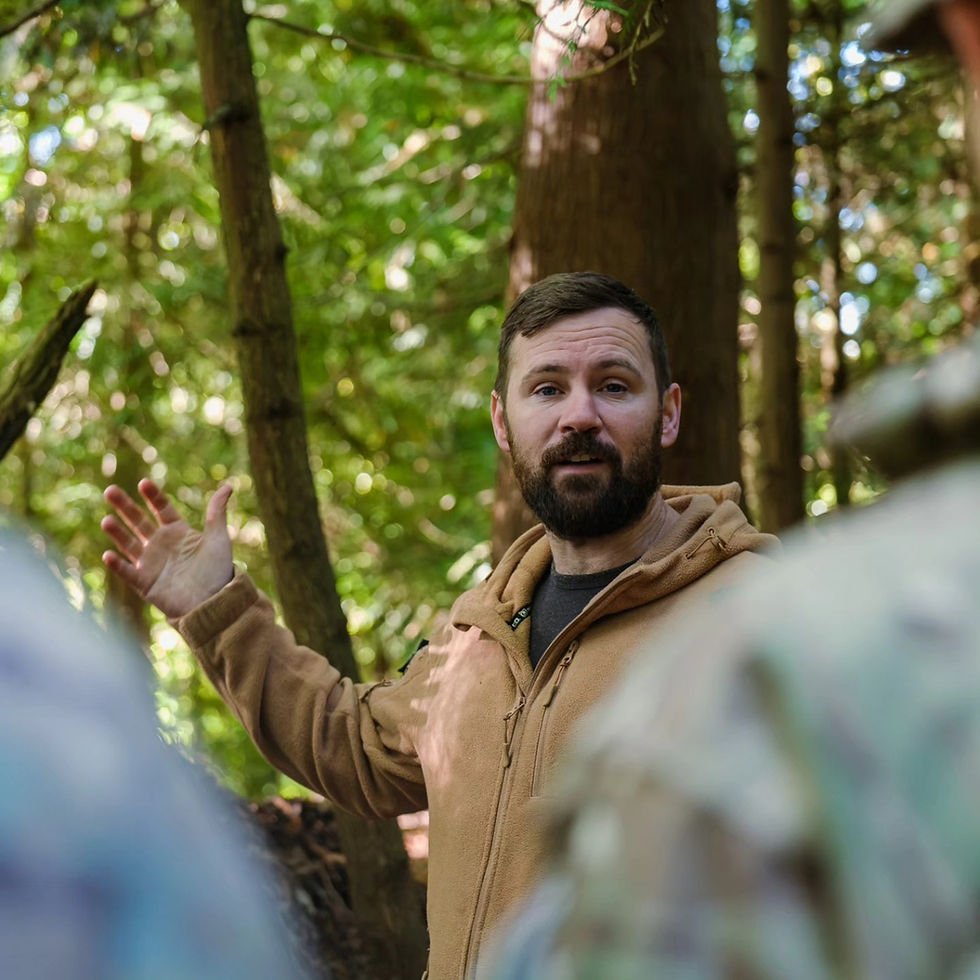
At South West Survival, I want you to go home knowing how to look after yourself in the outdoors. You'll get wet, you'll get your hands dirty and you might find some of the exercises harder than expected. But this is about learning practical skills, not proving how tough you are.
Our Commando Survival Foundation weekend runs at Bush Farm, near Saltash in Cornwall, just across the Tamar from Plymouth. It's a proper weekend in the woods, with straightforward facilities and enough time to actually practise what you're being taught.
We start with shelter, because being cold makes everything worse
If conditions turn against you, the first job isn't to make the fanciest shelter on Instagram. It's to get yourself out of the wind and rain, choose safe ground and keep the heat you've got.
We cover site selection, simple shelter systems, how to use the materials you've got and the mistakes people make when they put a shelter somewhere convenient rather than somewhere sensible. There's a difference between putting up a tarp on a sunny afternoon and getting some protection sorted when the weather has turned.
Fire is about preparation, not party tricks
Everyone wants to make fire. I understand why. It's one of my favourite skills to teach. But the important part is usually the bit people skip: choosing the right fuel, getting your tinder ready, protecting it from the damp and knowing how to build a fire you can actually maintain.
You'll practise fire lighting and learn why technique matters more than having the most expensive bit of kit. We also talk about when a fire is appropriate and when it isn't. Being responsible around woodland is part of knowing your craft.
Water: find it, assess it, treat it
Water is one of the first priorities in a survival situation, but clear water isn't automatically safe water. We'll cover the difference between finding a source and making it safe to drink, including sensible treatment methods and the limits of improvised techniques.
I don't teach people to gamble with untreated stream water. I want them to understand what the risks are and which methods make sense in the circumstances.
Navigation is the skill I wish more people took seriously
I spent years working with navigation in the Army. People will happily spend hundreds on a knife, then head out without knowing where they are. That makes no sense to me.
We'll look at practical navigation, understanding the ground, staying orientated and making decisions before a short walk becomes a problem. Phones and GPS are useful, but I want you to have the confidence to think for yourself when the screen or battery isn't helping.
First aid and keeping your head
We introduce the basic priorities of first aid in an outdoor setting and what to think about when help isn't immediately beside you. It's not a replacement for a formal first aid qualification, but you should leave with a better idea of what matters first.
Then there's the mental side. On Naked and Afraid in Colombia and later in South Africa, hunger, discomfort and fatigue changed how every decision felt. The Army prepared me for a lot of that, but surviving for weeks on very little was still a different experience.
On the course we work on staying calm, assessing a situation and making a sensible plan rather than rushing into the first idea that comes to mind.
There's a final exercise for a reason
It's one thing to practise a skill while I'm standing next to you explaining what to do. It's another to put several skills together. The final exercise gives you a chance to use what you've learnt and see what still needs work.
Don't expect perfection. I don't. I'd rather see somebody recognise a mistake, change their approach and finish the job properly than try to bluff their way through it.
What do you get, and what do you need to bring?
The Foundation weekend includes meals, drinking water, instruction, use of the course equipment and a completion certificate. You bring your sleeping bag, sleeping mat, refillable bottle and suitable outdoor clothing. It's a basic woodland venue with wilderness toilets, not a hotel.
You need a reasonable level of fitness for a weekend outdoors. Some activities involve walking with a light pack, working on uneven ground and spending time in whatever weather Devon and Cornwall decide to throw at us. The minimum age is 16, with a parent or guardian accompanying under-18s.
We have Foundation weekends planned for April and May 2027. Check the current event listing for exact availability and booking information rather than relying on an old screenshot or social media post.
Who is the course actually for?
Beginners are welcome. So are walkers, campers and people who've done a bit of bushcraft but want a more structured approach. You don't need to have served in the forces, and this isn't a military selection weekend.
My goal is simple: when something goes wrong outside, I want you to have a useful set of skills and a calmer way of thinking about it. That's worth more than a certificate on the wall.
Where to book
Find the upcoming South West Survival events or browse our survival experiences. If you're booking for a group, contact us directly and we'll explain the options.
If you'd like to know more about where my approach comes from, I've written about what 23 years in 29 Commando taught me about survival. You can also read about the 56 days I spent on Naked and Afraid. Neither was an excuse to stop learning.
Quick questions
Do I need previous survival training?
No. This is a foundation course. We'll explain the skills and give you time to practise them.
Is it a military boot camp?
No. It's practical survival training led by an experienced former soldier, not a British Army course or selection test.
Is food included?
Yes, meals and drinking water are included on the Foundation weekend. Tell us about dietary requirements during booking.
Where is the course held?
At Bush Farm near Saltash in Cornwall, a short distance from Plymouth. Full joining instructions are provided to people who book.


Comments