

Choosing an Outdoor Education Provider in Devon: 8 Questions Schools Should Ask

Choosing an outdoor education provider in Devon comes down to asking the right questions before you book, not after. Whether you are planning outdoor education in Devon through Forest School, a single outdoor learning day or a school residential, the answers a provider gives in that first conversation tell you most of what you need to know about how the sessions will actually run.
I served 23 years in the British Army with 29 Commando Regiment Royal Artillery, and I now run South West Survival in Plymouth, working with schools across Devon and Cornwall. These are the questions I would want answered if I were the teacher on the other side of the table. Use them with any provider, including us.
Start with your own policy and your EVC
Before you contact anyone, check your employer's educational visits policy. Many schools and local authorities in England follow OEAP National Guidance, and your educational visits coordinator (EVC) will know which checks your employer expects before you commit to an external provider.
Where a provider holds an external quality badge, such as the Learning Outside the Classroom Quality Badge, some of those checks have already been looked at independently. Where it does not, your employer may ask the provider for a written statement or further information. Knowing this up front saves weeks of back and forth.
Two documents are worth ten minutes of any visit leader's time: the Department for Education's guidance on health and safety on educational visits, and the HSE's page on school trips and tackling the health and safety myths, which makes clear the focus should be on managing real risks rather than on paperwork.
Eight questions to ask an outdoor education provider
1. Who will actually lead the sessions?
Ask for a name, not just "our team". Then ask what qualifications that person holds and whether they fit what you are booking. If you are buying Forest School, the Forest School Association's principles and criteria for good practice expect sessions to be led by a practitioner holding at least an accredited Level 3 Forest School qualification, so ask whether the lead holds one.
At South West Survival, Forest School sessions are led by me. I hold the AIM Qualifications Level 3 Certificate for Forest School Leaders and an NCFE Level 4 bushcraft qualification.
2. What are your safeguarding arrangements, DBS checks and insurance?
These are standard questions and any provider worth booking will expect them. Ask to see the relevant documents rather than accepting a quick yes, and check them against what your employer requires. Our own pages say the same thing: ask South West Survival about its safeguarding arrangements, DBS checks and insurance before you book, so it is settled at enquiry stage rather than the week before.

3. How many instructors will be with the group, and what will our staff do?
Staffing should be agreed in writing before the day. Ask how many of the provider's instructors will attend for your pupil numbers, and what role your own staff are expected to play. Do not assume school staff are counted as part of the provider's staffing unless the provider tells you so.
4. How will the risks be managed, and will we see the plan?
Outdoor learning involves real, managed risk, and that is part of its value. Fire, tools and uneven ground are part of the learning, not things to be removed. Ask how the provider manages those risks for your age group, and whether a plan, timings and kit list will be agreed with your staff before the first session. If the answer is vague, treat that as information.
5. Can the sessions be adapted for our pupils?
A good provider shapes the sessions around your group rather than running the same day for every school. We work with KS1 to KS4 classes, SEND units, alternative provision and home education groups. Ask how activities change for pupils with additional needs and how health information is handled. Keep the enquiry itself to a brief summary; detailed information should be shared securely once a booking is confirmed.
6. Where will it happen?
Forest School can run in your own grounds or a nearby green space, which saves travel time, or at a woodland site, which gives pupils a completely new setting. For a residential, ask about the site, where everyone sleeps, how meals work and the supervision plan. With us, pupils and staff sleep in bell tents and meals are cooked over the campfire with pupils helping, and the exact site and arrangements are agreed with each school during planning.
7. What is included in the price, and what costs extra?
Compare like with like. Ask whether planning, equipment and materials are included, whether travel is charged, and how deposits work. Our Forest School formats and prices are published on our Forest School page for schools, where prices include planning, equipment and materials, and travel outside Plymouth may cost extra. For residentials, deposits vary by booking and are confirmed before a booking is accepted.
8. What happens after the session?
The day should not end at the school gate. Ask how the provider links what pupils did back to your curriculum and whether they check in with you afterwards. Outdoor sessions link naturally to science, geography, PSHE and outdoor and adventurous activities in PE, and a short reflection at the end of each session is where much of the learning gets put into words.
Warning signs worth noticing
Vague answers about who will lead the group on the day
Reluctance to share documents your employer asks for
The same programme offered to every school, whatever your aims
Pressure to confirm before your EVC has completed their checks
A one-off day sold as Forest School with no explanation of what that label means
On that last point, our guide to choosing between Forest School activity days, six-week blocks and longer programmes explains what each format realistically delivers.
Forest School and residentials are separate services
Schools sometimes ask one provider for both without realising they are different things. Forest School is regular, day-based learning outdoors. A residential is an overnight trip. Ask each question above for each service you are booking. You can read more about our school residentials in Devon and Cornwall if an overnight trip is on your plan for next year.
Put these questions to us
If you are looking for outdoor education in Devon, Plymouth or Cornwall, ask us all eight. Tell us your year group, rough pupil numbers, preferred dates and what you want pupils to take away, and we will come back to you to talk through dates, location and activities. Send your details through our school enquiry form, or call 07830 497130.
About the author
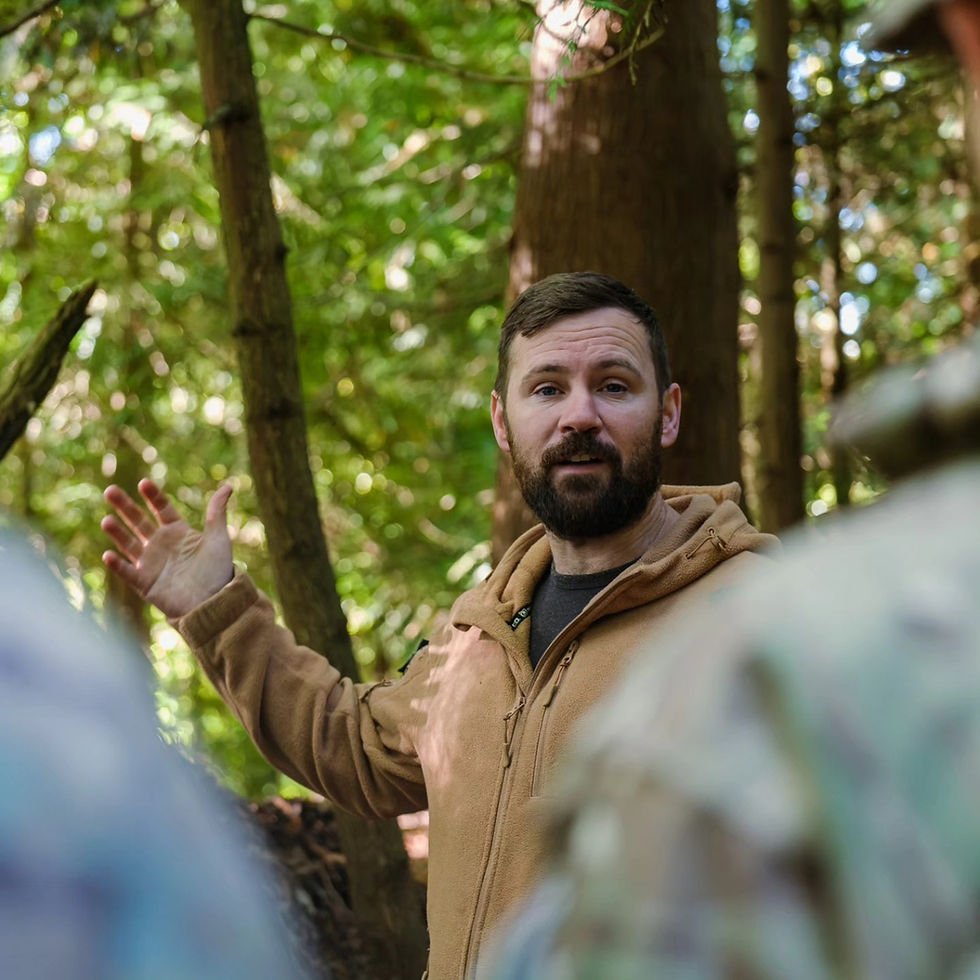
Steven Kelly is the founder of South West Survival in Plymouth. He served 23 years in the British Army with 29 Commando Regiment Royal Artillery, holds the AIM Qualifications Level 3 Certificate for Forest School Leaders and an NCFE Level 4 bushcraft qualification, hosts The Survival Debrief Podcast and has appeared on Naked and Afraid. Read more about Steven at stevenkelly.uk.


Comments