

Forest School in Winter: How Sessions Keep Running Through the Cold Months

Forest School in Devon does not have to stop when the clocks go back. Winter Forest School sessions run through the cold months with the right clothing, a slightly different plan and a group that knows what to expect, and for many pupils the woods in December are more memorable than the woods in June.
This guide is for teachers, heads and outdoor learning leads in Plymouth, Devon and Cornwall who want to keep pupils outdoors through the autumn and spring terms. It covers what changes in winter, what pupils should wear, and how to plan sessions that still work when the days are short and the ground is wet.
Why keep Forest School going through winter?
The Forest School Association's principles describe Forest School as a long-term process of frequent and regular sessions, run over an extended period and, where practicable, encompassing the seasons. A programme that pauses every November and restarts in May misses a large part of that.
Winter also gives pupils things the summer cannot. Bare trees make the shape of the woodland easier to read. Mud shows tracks. Cold weather gives fire lighting and shelter building a real purpose rather than feeling like a game. Pupils who come back week after week see the same place change, and that continuity is what separates Forest School from a one-off trip.
What pupils should wear for winter Forest School
Clothing decides whether a winter session is a good one. A pupil who is cold and wet stops learning, however good the activity. The basics we ask schools and parents to think about are simple:
Layers rather than one thick coat, so pupils can add or remove warmth as they move between active and quieter tasks
A waterproof jacket and waterproof trousers, even on days that start dry
Sturdy, waterproof footwear such as wellies or walking boots, with warm socks
A hat and gloves, plus a spare pair of gloves in a bag, because wet gloves stop helping very quickly
Clothes that can get muddy without anyone worrying about it
Cotton is the thing to avoid where possible. Once a cotton hoodie or pair of jeans gets wet it stays wet and pulls heat away from the body. If your school can keep a small stock of spare waterproofs and wellies for pupils who arrive without them, it saves a lot of disappointment on the day. Ask us about a kit list when you book.
How winter Forest School sessions change
Shorter days and tighter timings
In December the light starts to go in mid-afternoon, and woodland under cloud gets dark earlier than an open playground. Half-day sessions often fit winter better than full days, and timings need a margin so the group is packed away and back on time without rushing. Both half and full days are possible, so it is worth talking through which suits your timetable for the winter term.
Fire becomes the centre of the session
In summer a fire is one activity among many. In winter it becomes a base. Pupils learn how to prepare a fire properly, why dry kindling matters, how to behave around a fire and why a well-built fire is worth the effort on a cold day. Fire lighting and fire safety are part of what we teach, and winter is when pupils understand the point of it most clearly.
More movement, less standing still
Cold creeps in when children stand around listening. Winter sessions work best with short introductions and plenty of active tasks: gathering materials, building shelters, working on natural navigation challenges and exploring the site. Quieter activities such as whittling or nature crafts still have a place, but they are better timed for when everyone is warm and fed.
Shelters with a real purpose
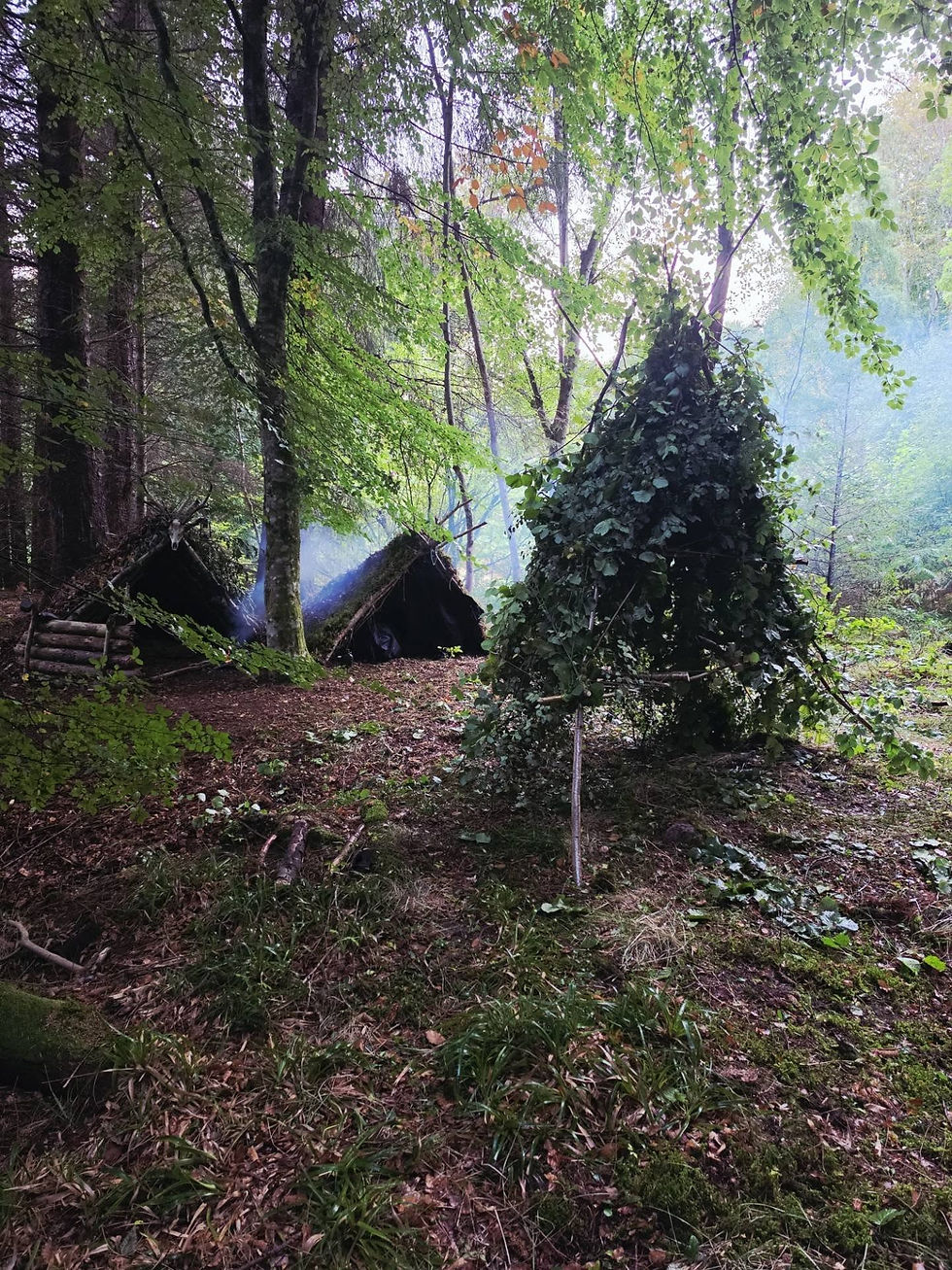
Building a group shelter from tarps and natural materials means more when there is rain in the air. Pupils quickly learn to test whether it actually keeps them dry, where the wind is coming from and why the choice of site matters. That kind of problem solving is far more engaging when the result affects how comfortable they are for the rest of the session.
Nature activities that suit the cold months
Winter woodland is not empty. It just asks pupils to look more carefully. Good winter activities include:
Identifying trees by bark, buds and shape rather than leaves
Looking for animal tracks in mud and signs of feeding
Noticing how the weather changes the woodland from one week to the next
Comparing sheltered and exposed spots and talking about why it matters
Keep winter nature work to observation. Any foraging or plant identification should be guided by a knowledgeable adult, and nothing should be eaten simply because it looks familiar.
Planning a winter block or a spring start
If you already run Forest School, winter is a chance to keep momentum rather than lose it. If you are new to it, the autumn term is a good time to plan a spring block so you are not trying to organise everything in January. South West Survival delivers Forest School on schools' own grounds or at our woodland site, as activity days, six-week blocks of one session a week, or longer weekly and termly programmes. We work with pupils from KS1 to KS4, SEND units, alternative provision and home education groups.
Before you book, settle a few things with any provider: where sessions will run, half days or full days, which year group, any additional needs, and how decisions about severe weather such as high winds in woodland will be made. Schools can also ask South West Survival about its safeguarding arrangements, DBS checks and insurance before booking. If you are still choosing between formats, our guide to choosing a Forest School programme in Plymouth compares activity days, six-week blocks and long-term programmes, and our article on what children really learn at Forest School explains why regular sessions matter.
Book winter or spring Forest School for your school
Winter Forest School is not about toughing it out. It is about pupils learning that they can be warm, busy and comfortable outdoors in any season, and that is a lesson worth teaching. See formats and prices on our Forest School page, or tell us your year group, rough numbers and preferred dates through our school enquiry form and we will come back to you to plan sessions for your school.
About the author
Steven Kelly is the founder of South West Survival in Plymouth. He served 23 years in the British Army with 29 Commando Regiment Royal Artillery, holds the AIM Qualifications Level 3 Certificate for Forest School Leaders and an NCFE Level 4 bushcraft qualification, and has appeared on Naked and Afraid and Bear Grylls: Wild Reckoning. Read more about Steven at stevenkelly.uk.


Comments