
Forest School for SEND Pupils: Planning Inclusive Sessions in Plymouth

Forest School for SEND pupils in Plymouth works best when it is planned around the group, not squeezed into a standard session. If you lead a SEND unit, a specialist setting or alternative provision and you are weighing up Forest School, the planning you do before the first session matters more than any single activity on the day.
This guide sets out how we approach that planning at South West Survival, what is worth telling us when you enquire, and how to choose a location and format that suit your pupils.
Start with the group, not the activity list
Every SEND group is different, and two pupils with the same diagnosis can need very different things outdoors. A useful session plan starts with questions about the pupils rather than a list of activities: how they communicate, what helps them settle, what unsettles them, any sensory preferences, mobility and access needs, and what they already enjoy.
Your staff hold most of those answers. On our Forest School and outdoor education for schools page we describe SEND and alternative provision sessions as smaller groups and adapted activities, planned with your staff. That last part is the important bit. The people who see your pupils every day are the best guide to what a good first session looks like.
What to tell us when you enquire
You do not need to send a full profile at enquiry stage. A short summary is enough for us to start planning:
The number of pupils and staff, and their year groups or ages.
A brief outline of needs that affect being outdoors, such as communication, sensory, mobility or access needs.
Whether pupils have spent time in woodland or outdoor settings before.
Where you would prefer sessions to run: your own grounds or our woodland site.
What you want from the sessions, whether that is curriculum links, social skills, regulation or simply regular time outside.
Keep personal details brief at this point. Detailed information is shared once a booking is confirmed, and only what is needed to run the sessions safely. The school enquiry form has a separate field for SEND and accessibility needs, so you can flag them from the start.
Choosing the right location
Forest School can run in your school grounds or a nearby green space, or at our woodland site. Both have a place in SEND planning.
Your own grounds remove travel and the stress of an unfamiliar journey. Pupils already know the toilets, the gate and the route back to class, which can make a first session far easier. Our woodland site gives a richer natural setting and a real sense of going somewhere new, which some pupils thrive on and others need building up to. A sensible approach for many groups is to start somewhere familiar and move further afield once routines are established.
Why regular sessions suit many SEND groups
We offer one-off activity days, six-week blocks with one session a week, and longer weekly or termly programmes. You can read how each format works in our guide to choosing a Forest School format in Plymouth.
For many SEND groups, repetition is where Forest School earns its place. The Forest School Association's principles describe Forest School as a long-term process of frequent, regular sessions with the same group, driven by the learners' needs and interests. The same guidance also recognises that session length may need to differ for participants with severe and complex additional needs.
In practice, a one-off day is a useful taster. A six-week block lets you see how the group responds over half a term. A longer programme gives pupils time to learn the site, the routine and the people, which is when many start to try things they would not attempt on day one.
Building routine into each session
The same opening each week, such as a short circle with a clear plan for the session.
Boundaries that pupils can see, marked on the ground rather than only explained.
Simple visual cues or symbols your class already uses, brought outside.
A quiet spot pupils can choose to go to, agreed in advance.
The same closing routine, so the end of the session is predictable too.
Adapting activities without lowering expectations
Adapting a session does not mean doing less. It means breaking skills into smaller steps and giving pupils real choice about how far they go.
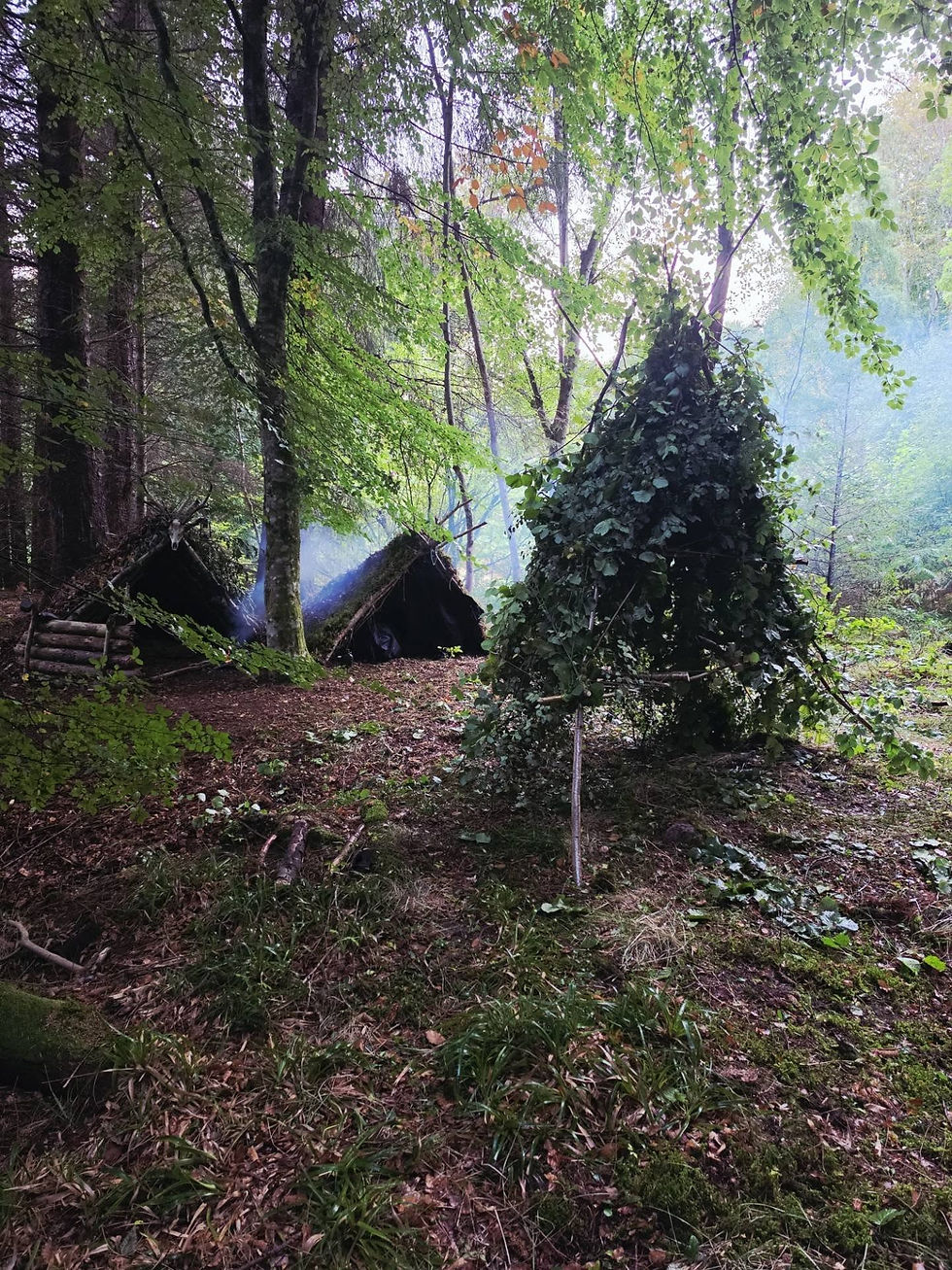
Fire lighting can start with watching, then using a fire steel to catch a spark on cotton wool, and later building and lighting a small fire. Shelter building can begin with a den for a toy or a pine cone before a group shelter. Tool work, such as whittling, is introduced step by step and only where it suits the individual. Collecting and carrying materials gives pupils who need movement a purposeful job, while a sit spot or nature hunt suits those who prefer something calmer.
Our article on what children learn at Forest School beyond building dens covers the wider skills these activities practise.
Working with your staff on the day
Agree roles before the first session. Your staff are often the first to notice a pupil becoming overwhelmed, and they know the communication approaches that work. A quick conversation beforehand about what to do if a pupil needs a break, wants to leave an activity or needs a different task saves time on the day.
Schools and organisers can ask us about our safeguarding arrangements, DBS checks and insurance before booking. Those conversations are part of normal planning, and we would rather you asked.
Cost and planning time
Forest School prices are published on our Forest School page. SEND groups needing extra support are quoted individually, so the sooner we know about your group, the sooner we can give you an accurate figure. If you are thinking about sessions for the spring or summer term, now is a good time to start the conversation.
Plan Forest School for your SEND group
Good Forest School for SEND pupils comes from early planning, honest information about the group and a format that gives pupils time to settle. If you run a SEND unit, specialist setting or alternative provision in Plymouth, Devon or Cornwall, tell us about your pupils and we will talk through what would work best.
Use our school enquiry form and include any SEND or accessibility needs in the additional requirements field. If your school is also looking at an overnight trip, our school residentials in Devon and Cornwall are a separate service with their own enquiry form.
About the author
Steven Kelly is the founder of South West Survival in Plymouth. He served 23 years in the British Army with 29 Commando Regiment Royal Artillery, holds the AIM Level 3 Certificate for Forest School Leaders and an NCFE Level 4 bushcraft qualification, and hosts The Survival Debrief Podcast. Read more about Steven at stevenkelly.uk.


Comments